Who are you?
What industry do you work in?

How an environmental advocacy organization leads by example, offering employees sustainable commuter benefits they can use every day—and confidently recommend to others.
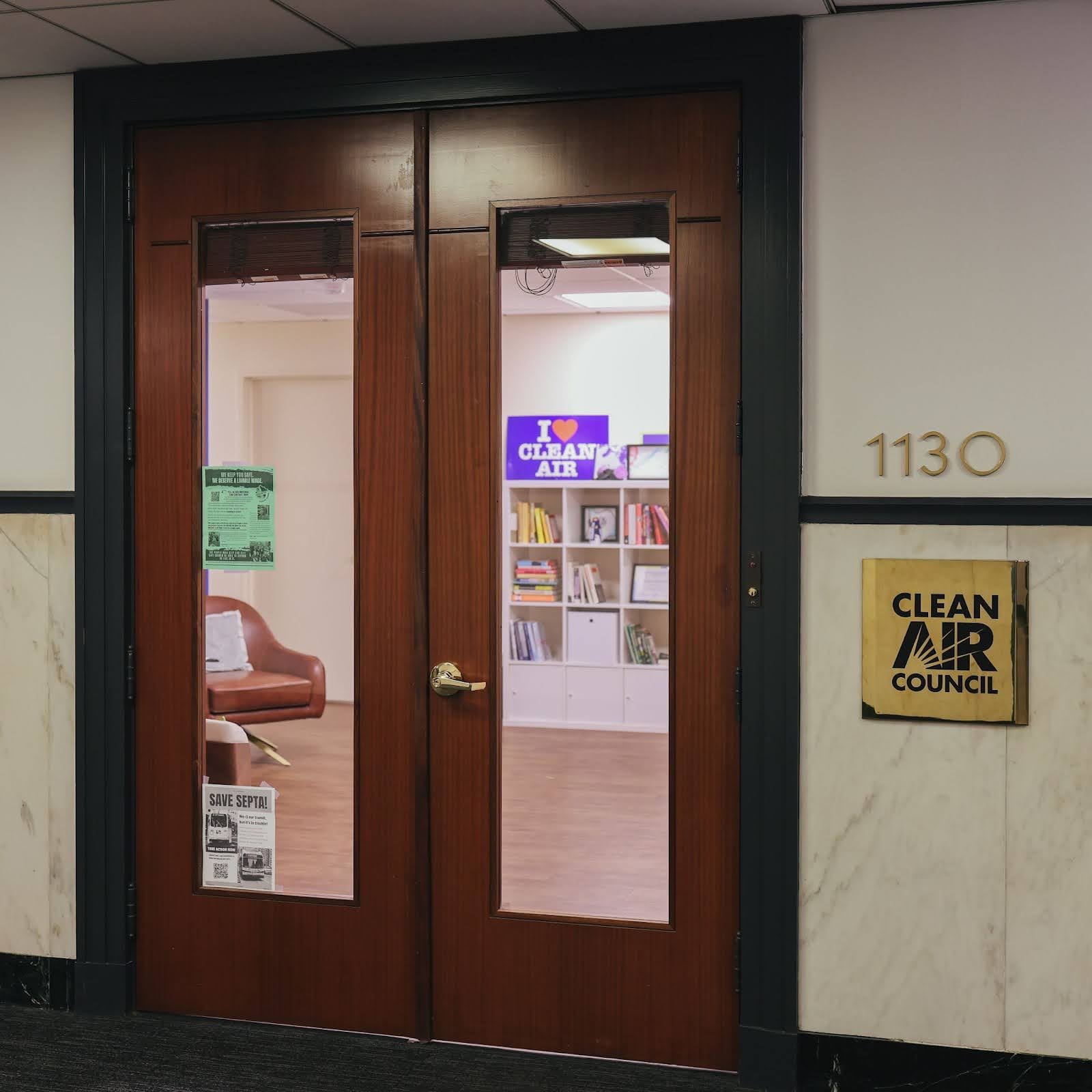
Founded in 1967, Clean Air Council is a Pennsylvania nonprofit with a long history of protecting and advocating for a healthier environment. Their work has driven positive change at both the statewide and local levels—from developing the region’s first air-quality reporting system and helping pass the Clean Indoor Air Act to supporting street-safety programs like Feet First Philly and Transit Forward Philadelphia.
With a staff of around 40 employees split between Philadelphia and Pittsburgh, the Council advocates for sustainable transportation, clean energy, and environmental justice through outreach, education, and policy work. True to its mission, the organization partnered with Jawnt to “walk the walk” when it comes to offering equitable, sustainable commuting for its own employees.
Before the pandemic, commuting at Clean Air Council was straightforward: most employees took public transit every day and used a standard pre-tax commuter benefit. But as the organization shifted to a hybrid schedule, commute patterns became less predictable. Some staff traveled into the office only a few days a week, making it harder to know how much to set aside for their pre-tax commuter benefit. At the same time, the Council wanted to maintain its commitment to sustainable transportation, not just in its advocacy work, but in how it supported its own team.
An additional challenge emerged around equity. While employees in Philadelphia were eligible for SEPTA’s Key Advantage program—which offers discounted all access SEPTA monthly passes to enrolled employees—staff in the Pittsburgh office had no equivalent option. The Council needed a solution that would offer comparable support to both offices, reduce out-of-pocket commuting expenses, and keep administrative lift to a minimum.
Administrative Specialist Corinne Bishop, who manages accounting and new-hire onboarding, saw an opportunity. After helping roll out Key Advantage for their Philadelphia employees, her team began exploring how to extend similar support to their Pittsburgh team.
“We had folks out in Pittsburgh who were not getting any sort of transit benefit, but were interested in Jawnt Pass. We wanted equity, not just equality, you know?”
To create a more equitable and mission-aligned commuter experience, Clean Air Council implemented a suite of benefits tailored to each region:
After evaluating the performance of these benefit options, Clean Air Council then decided to offer Pittsburgh employees monthly Pittsburgh Regional Transit (PRT) passes at a 100% discount, to more closely match the SEPTA Key Advantage experience. As a result, enrollment among Pittsburgh employees increased by 19% in the following month.
The Council worked with Jawnt to roll out the new solution to their Pittsburgh office, giving employees clear, step-by-step guidance on activating and using their benefits.
With Jawnt’s flexibility, Clean Air Council was able to fine-tune its benefits over the course of several months, going the extra mile to ensure Pittsburgh employees received a benefit that matched the value and convenience of SEPTA Key Advantage.
Clean Air Council uses staff surveys and ongoing feedback loops to track how the commuter benefit is performing and where it can be improved. The response has been overwhelmingly positive. As Sustainable Transportation Program Manager Titania Markland shared,
“Everyone on my team loves the pass because it’s one less barrier to using public transit.”
Nearly half of the survey respondents said they “love it”; one even said it “changed my life”.
Joanne Douglas, a Project Coordinator for the Council, said the benefit has eliminated an entire line item in her budget, making it an invaluable tool for recruitment and retention:
“It's not even just a nice benefit. I think it's crucial for keeping people on board, more so than other benefits.”
Because the Council also advises other employers on sustainable commuting, Markland’s team has the unique advantage of both using and modeling the benefit in real time.
“When we’re talking about promoting this thing to everyone, we can say, ‘oh, I have my card, this is how it works.’ You can build a conversation starting with that.”
The data reinforces the enthusiasm:
Plus, Markland said, the benefit supports more flexible commuting habits: employees use passes not just for commuting to work but also for errands and community events.
“I think the way we commute these days has changed, and the new benefit has been incredible for that.”