Who are you?
What industry do you work in?

We break down the latest research on remote and hybrid work, revealing how shifting schedules are reshaping commuting patterns, city centers, and employee expectations in 2025.

Last week, we had the pleasure of tuning in as Nick Bloom, William D. Eberle Professor of Economics at Stanford, presented to the ACT Employer Council about hybrid work and what it means for employers, cities, and commuters.
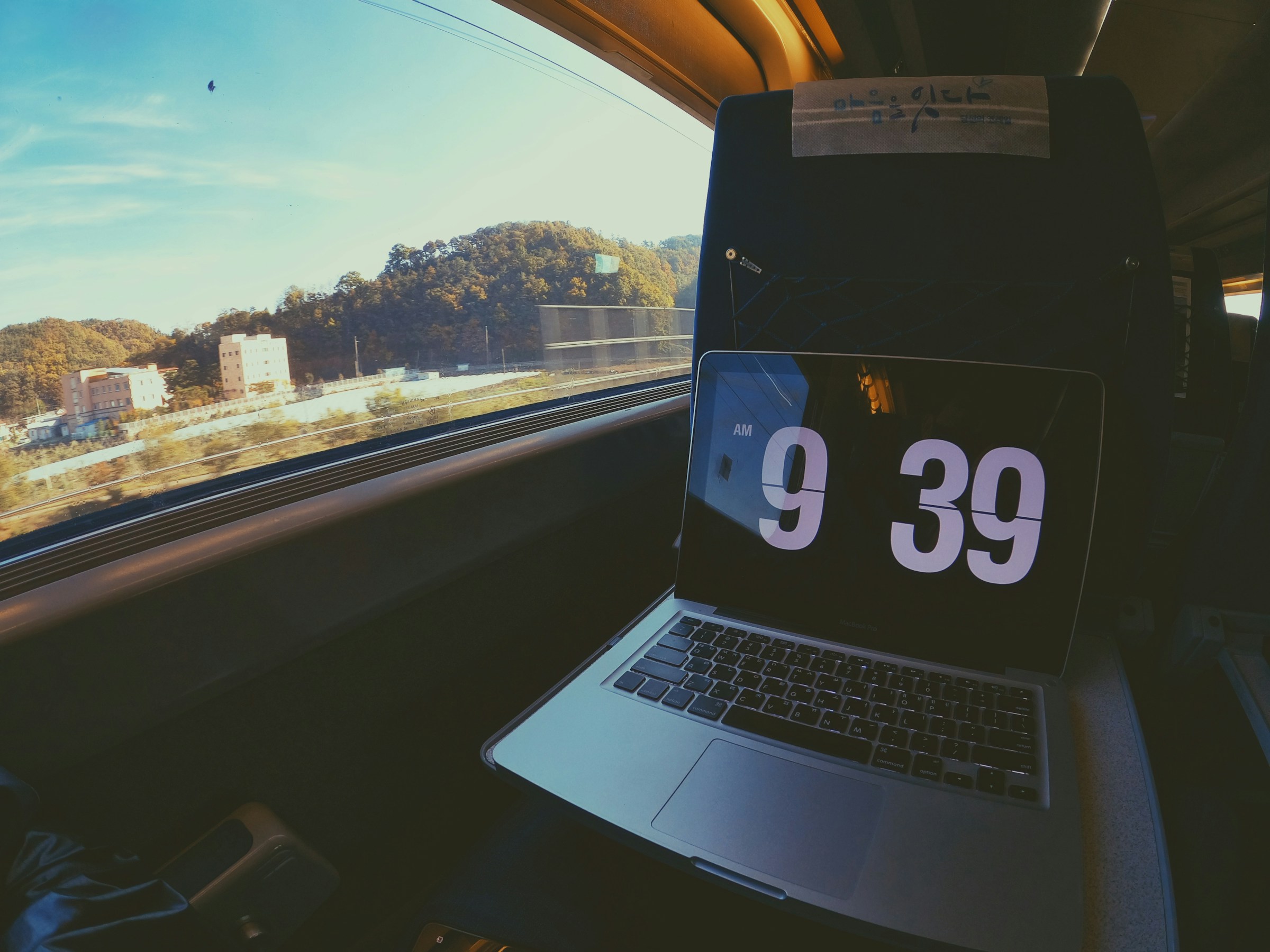
Many of us living and working around major urban cities might suspect that hybrid work has become the new norm, but what does this actually look like in 2025? How many days a week are office workers coming in? And how does the hybrid work-from-home model affect how people are using transportation in and around their cities?
Bloom’s presentation painted a much clearer picture of how new working schedules are affecting commuting patterns, city centers, and employees. Here are three key takeaways that stuck with us, and how employers might use these insights to make commuting better for their hybrid workforce.
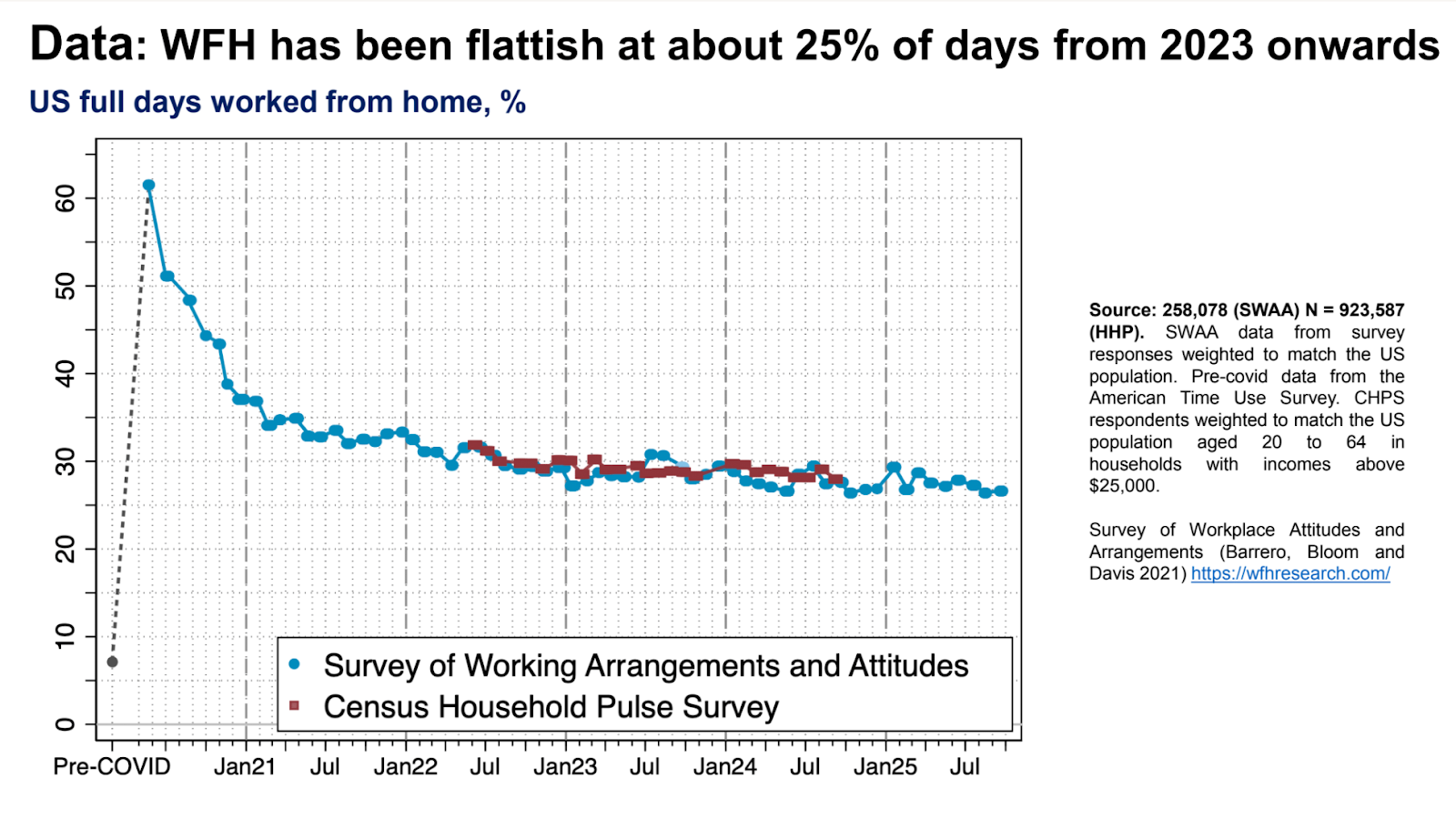
Across multiple data sources—survey responses, office badge swipes, and in-office cell phone pings—the same story emerges: after high levels in 2020 to 2022, work-from-home rates plateaued starting in 2023. The data presented by Bloom shows that roughly 25% of all U.S. workdays are now done from home, compared to about 5–6% before the pandemic.
According to a Flex Index report surveying hundreds of Fortune 500 firms, 69% of firms offer some kind of structured hybrid work environment. It’s worth noting that the second most common policy is full-time in office, at 24%.
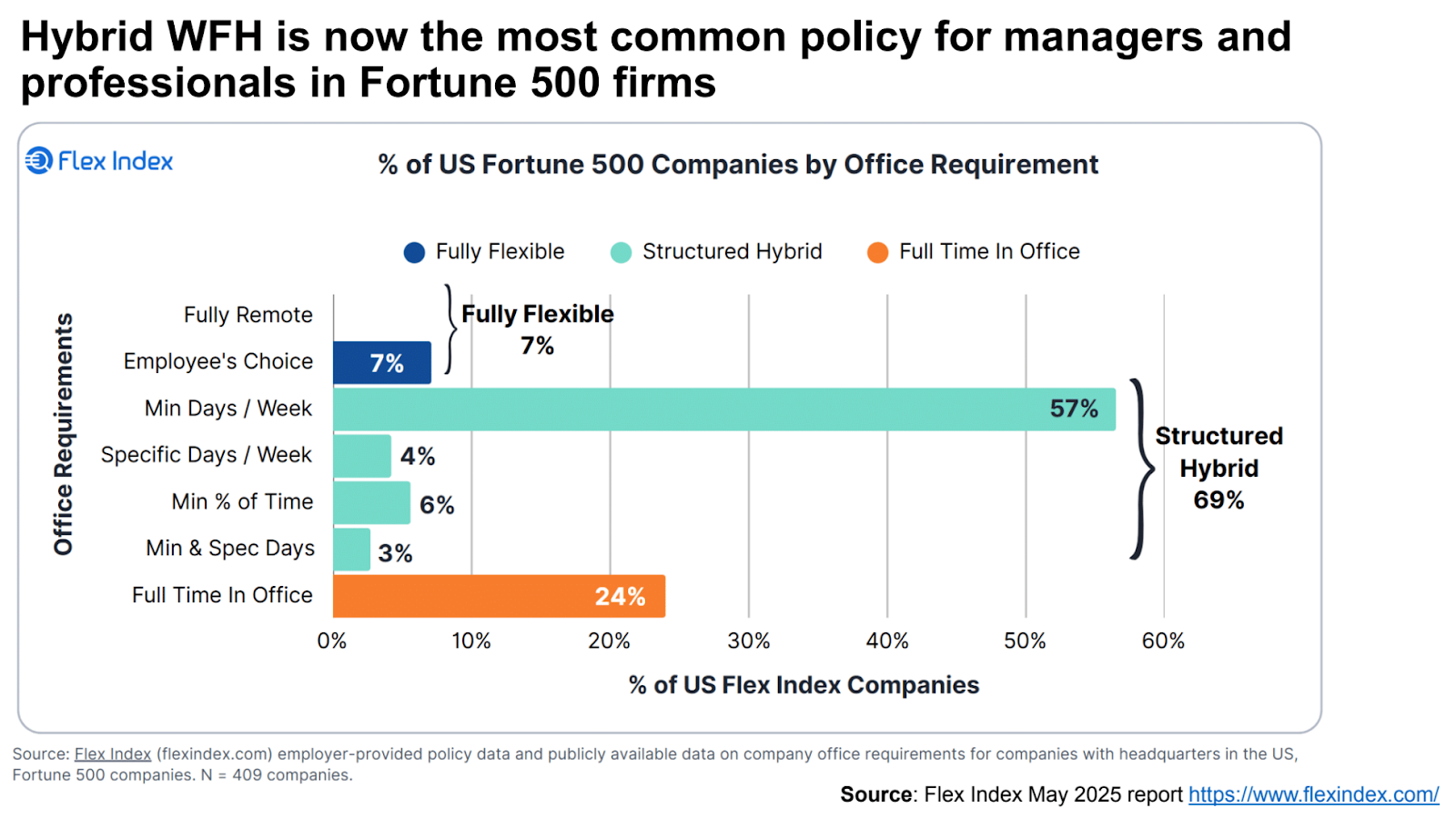
Of course, this varies widely by industry, with tech and finance companies much more likely to offer hybrid work options than those in construction, retail, education, and hospitality.
We think it’s promising that the majority of employers have put in the time and resources to standardize hybrid WFH schedules when possible, and expect to see a similar level of effort put toward making commutes more flexible and commuter-friendly. More on that below!
Gusto payroll data shows that employees, especially new hires, are living much farther from their workplaces than before. The share of workers living more than 50 miles from their office has more than doubled since 2020, with the biggest increases among employees in their 30s and 40s.
This shift reflects both housing preferences and the growing acceptance of hybrid schedules. Workers are willing to tolerate longer commutes if they only need to make them a few times per week.
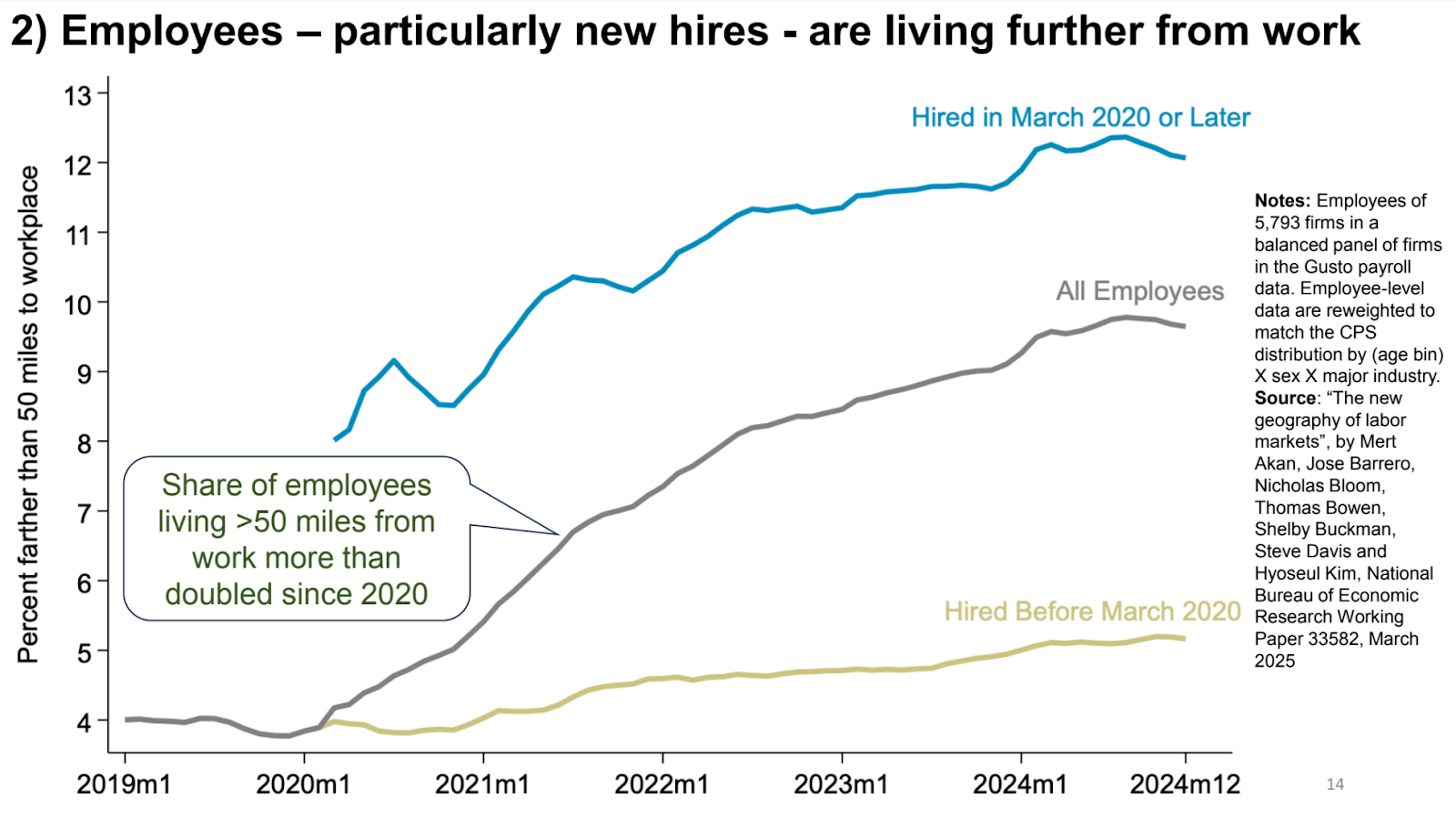
The big difference in commuting distance between workers hired before March 2020 and workers hired after March 2020 should be a clear signal for HR and Recruiting teams: whereas flexible work and commuting options may not have been expected perks before the pandemic, they now offer a meaningful competitive edge when hiring new talent.
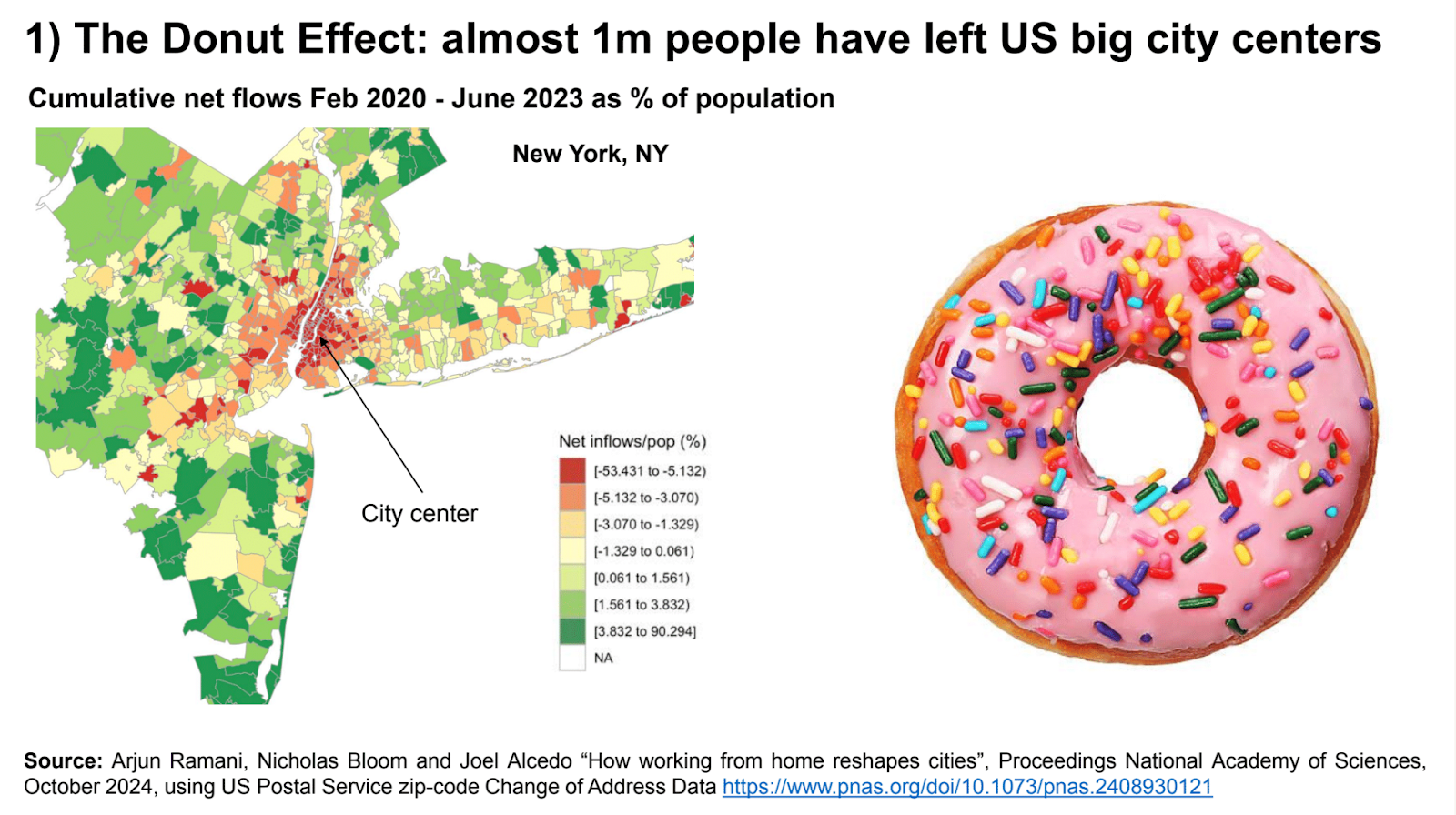
One of the most striking trends Bloom highlighted is the “donut effect”: nearly 1 million people have moved out of major U.S. city centers since 2020, creating a hole where dense weekday economic activity once existed. This has created significant challenges for transit systems and urban cores that still depend on pre-pandemic commuting patterns to stay financially resilient.
Many office buildings have become empty and underutilized. Although some have successfully converted to residential space, many developers face expensive zoning and construction considerations.
Transit agencies are also feeling the pressure. Many are experiencing budget shortfalls, forcing difficult decisions about service cuts, fare increases, or emergency funding.
Unlike the donut above, we won’t sugarcoat it: cities and transit agencies are struggling. But there are opportunities to bring people back into city centers, and not just commuters.
Consider the “golf effect” that has arisen from flexible WFH work: according to Bloom, weekday leisure trips have surged, illustrated by a 178% increase in Wednesday afternoon golf rounds. With fewer workers tethered to strict daily commutes, weekdays are becoming more dynamic.

For people living within a train or bus ride from their nearest city center, why not make it easier for them to take transit for non-work weekday activities without sitting in traffic or hunting for parking? We’re envisioning a world where it’s easy (and cheap!) to hop on the train to a morning doctor’s appointment before meeting up with a client for coffee downtown. Or equally convenient to catch the bus for a visit to the market or gym during lunch break. Instead of paying for parking, employees are incentivized to take transit with a free or discounted transit benefit provided by their employer.
There are encouraging stories of transit agencies working with local employers to offer no- or low-cost transit passes, not just for work but for leisure, too. We think this symbiotic relationship has the potential to grow even more.
The future isn’t fully remote or fully in-person; it’s the flexible middle ground we’ve collectively settled into.
And good news for employers: Bloom’s research shows that hybrid policies neither hurt productivity nor lower performance. On top of that, hybrid policies have also shown to reduce turnover, an important consideration for HR leaders looking to boost employee wellbeing.
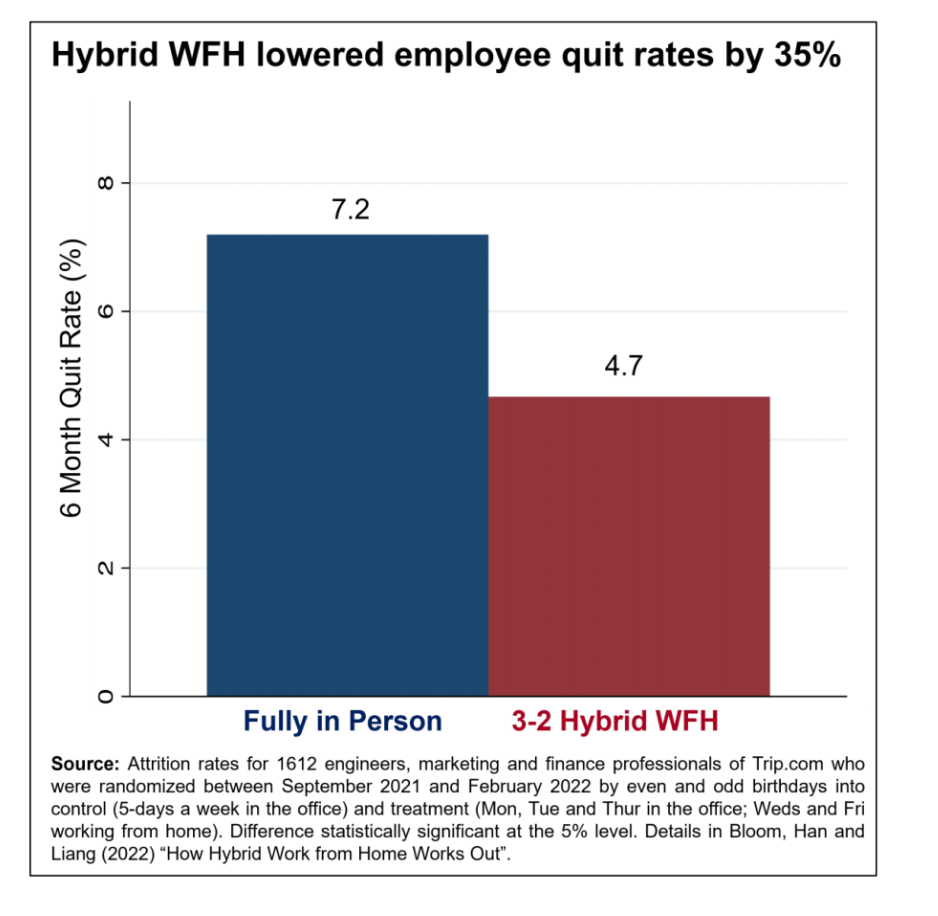
That said, a hybrid schedule includes at least some in-person time, and making that face-to-face time count is just as important for employee morale and productivity. When employees can grab lunch together, meet out-of-town colleagues for coffee, and more easily spark conversation in and around the office, it doesn’t just boost productivity and innovation, it helps increase transit ridership and brings economic activity back to city centers: a win-win for everyone.
The challenge now is making in-person days worth the commute, especially as longer commuting distances and flexible weekday routines shape how employees work. Across gas, parking, and transit fares, the cost of getting to work continues to rise (with car expenses growing fastest). Employers who want to maximize in-office engagement should consider lowering the barrier to commuting, whether it’s through transit stipends, company shuttles with reliable Wi-Fi, or (in the case of bike-friendly cities) bikeshare memberships.
We agree there's real value to in-person work, but it doesn’t need to happen every day. What does matter is making those in-person days worth the commute—and while you’re at it, making the commute better, too.
If you’re an employer exploring ways to better support your hybrid workforce, get in touch to learn how Jawnt can help you design the right mix of commuter benefits for your workforce.