Who are you?
What industry do you work in?

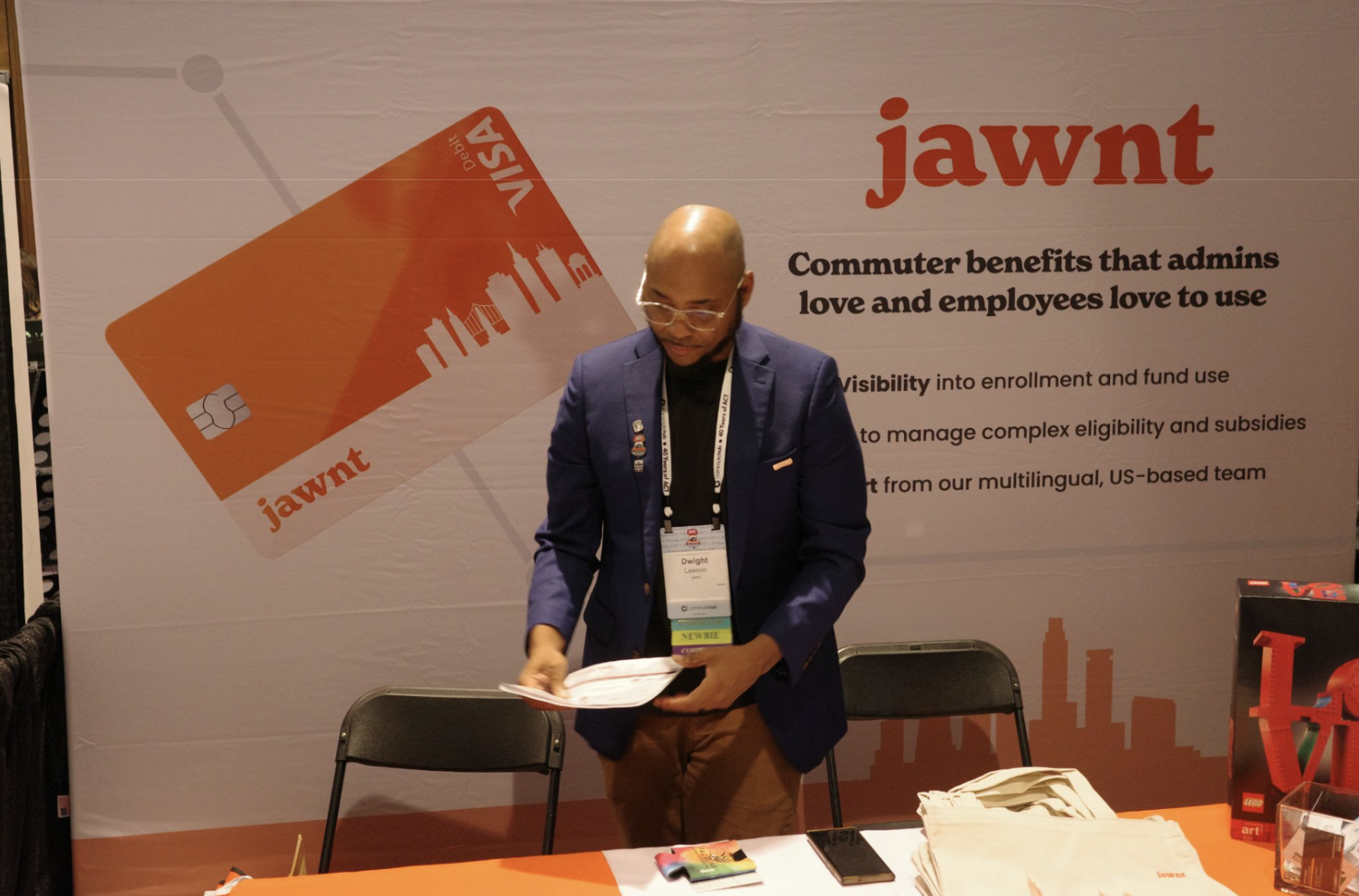
Over the last week, the Jawnt team hit the road with ACT: Dwight joined the Chesapeake Chapter in DC, and Ruth joined the Patriot Chapter in Providence. Here’s a recap.

Over the last week, the Jawnt team hit the road with ACT: Dwight joined the Chesapeake Chapter in DC, and Ruth joined the Patriot Chapter in Providence. Here’s a recap.
I rode Amtrak down from Philadelphia for the Chesapeake Chapter’s Fall into the Sea of TDM and came away with a few big takeaways.
Day 1 centered on how organizations are rebuilding commute options post-pandemic. Vanpooling was a standout: a successful program takes intentional design, a dedicated team, and strong employer partnerships. Across vanpools, scooters, and e-bikes, it was clear there’s no one-size-fits-all. Incentives and credits work best when they match the many ways people actually commute.
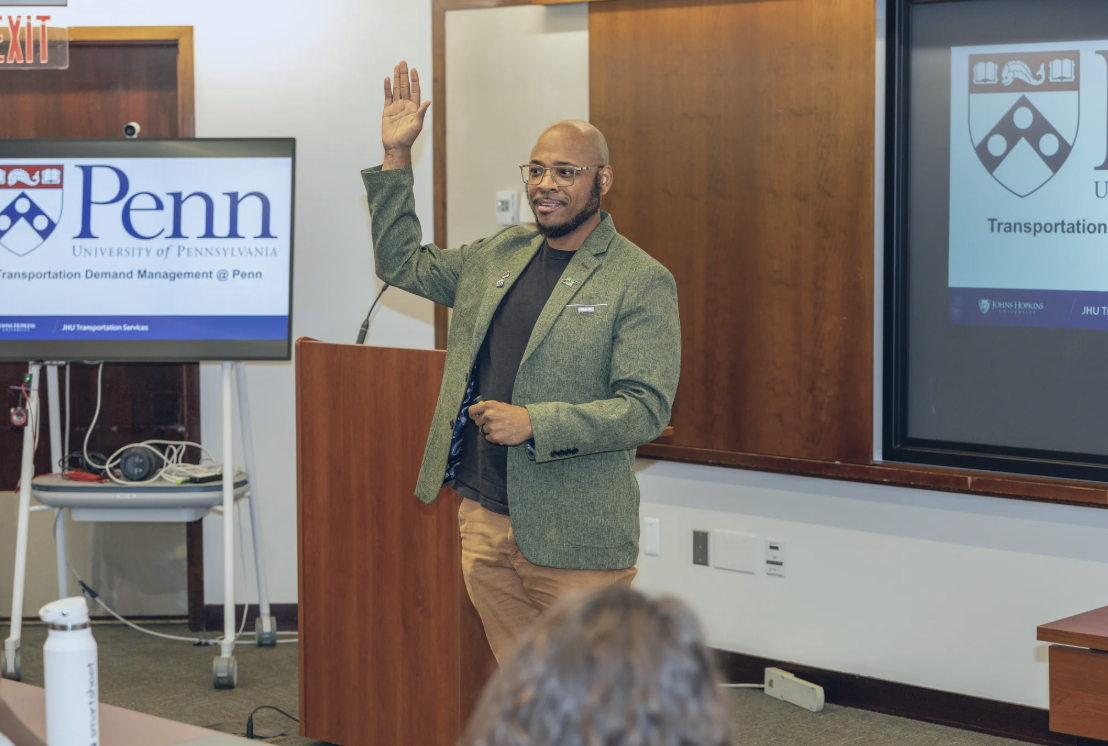
Day 2 focused on accessibility and campus mobility. The morning covered ADA best practices and the tools agencies and organizations are using to stay compliant and inclusive. I then joined a panel with Aysha of the University of Maryland and Greg of Johns Hopkins, sharing Penn’s perspective on improving both commuter benefits and parking. Aysha and Greg offered great examples of transportation teams driving real impact: UMD through Art in the ROW Traffic Gardens and Johns Hopkins through its shuttle program and road/bridge redesign initiatives.
Flexibility matters: Custom subsidies and a single card that covers every mode, from WMATA and MARC to VRE and everything in between, including Capital Bikeshare, make benefits work for multimodal commuters. Eliminating the need for multiple cards and apps makes the commute experience better.
Compliance should be seamless: DC’s Parking Cash-Out Law was top of mind, and employers want it handled without added complexity, whereas a lot currently handle it very manually.
Data drives better decisions. In conversations afterward, many folks I spoke with wanted more visibility into how employees commute so they can invest smarter, and that’s what intrigued them about Jawnt in sharing Penn’s perspective on the panel.
I took the MBTA Commuter Rail down to the Ocean State for the Patriot Chapter’s Fall into TDM event. I coordinated the event’s panels as a co-organizer, so it was a treat to see the audience engage so well with our speakers.
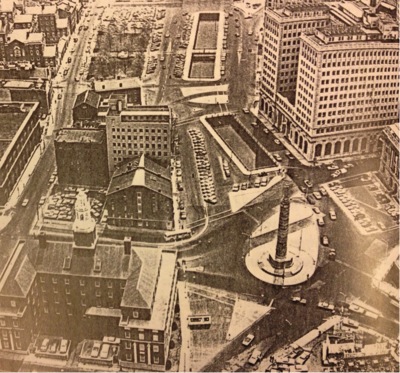
Day 1 was all about our host city: Providence, RI. The Patriot Chapter covers New England, which has a diverse set of transportation challenges. This year’s summit was intentionally put in a city with an established system, the best rapid train in the US (the Acela), a rapidly expanding bike network, yet an established car culture. We explored the city by foot, bike and bus. We heard the all-too-familiar story of a city that gave itself over to highways in the 1950’s and 60’s, and how planners and advocates are steadily giving the city back to people. I was most shocked to learn that, until the 1990’s, much of the river through downtown was paved for car parking. This photo below shows the “Suicide Circle” roundabout between the train station and downtown.
Day 2 was about the rest of the region. Our speakers started in the details, sharing how they made their transportation projects more accessible, more resilient, and more effective. My favorite panel was of course about transit pass programs, and all the new technologies rolling out across Rhode Island and Massachusetts, as well as our own partner Harvard talking about their recent successes. And we wrapped with a spotlight on neighborhood-level thinking, and some recent projects that used data and thoughtful engagement to push for better outcomes.
“Make paying the easiest part of transit.” This quote originated with a speaker from the Rhode Island Public Transit Authority, and was recycled the rest of the day. There’s already so much involved in figuring out your route, the schedule, getting to the first stop and getting from the last. Paying can be the easiest part, with the right policies and technology. RIPTA also shared that Providence students today pay for transit by showing their ID, which is great if it builds the habit. But when we change that payment method upon graduation, we risk challenging them to re-think their behavior. How can paying for transit be the easiest part?
Pilots, pilots, pilots. It’s almost a punchline among planners that everything is a pilot, as if people just can’t make up their minds. But in software, good development is iterative! We learn from our mistakes and conserve resources for better ideas. When a scooter battery sparked a fire inside a University of Vermont dorm, many administrators jumped immediately to ban micromobility devices completely from campus. When the campus transportation team tried making secure, weather-proof outdoor shelters, they learned that the state fire code was unclear on its requirements. So they broke out some raw materials and built their own, using references from other states and universities, and prototyped until they found something that was able to be successful. Sometimes you don’t know the response until you try a little.
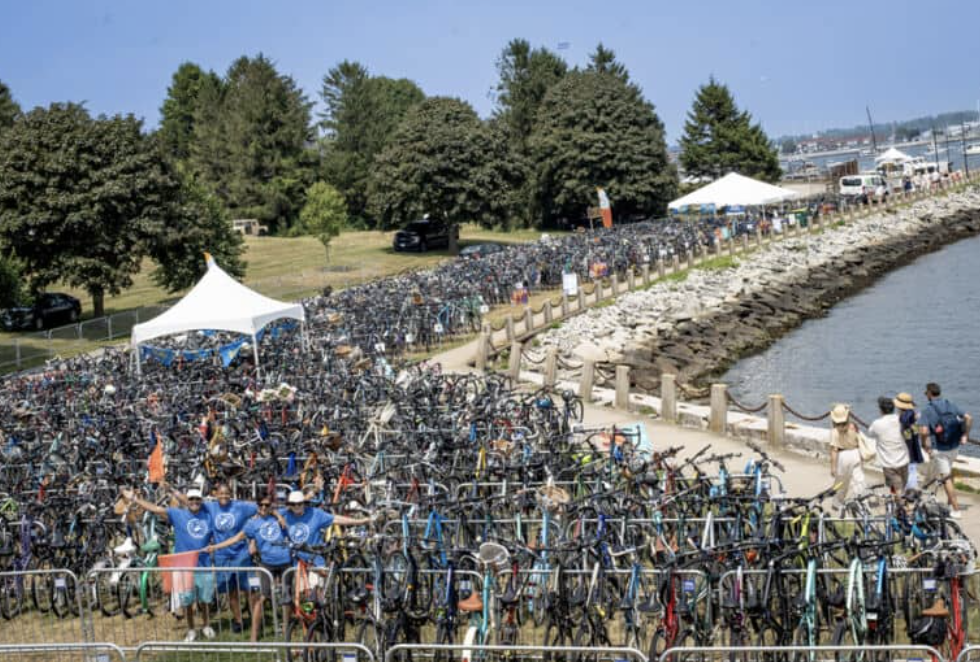
Big problems create opportunities for big solutions. The Newport Folk and Newport Jazz festivals each draw 10,000 people a day to a tiny peninsula with only 2000 parking spaces. Bike Newport goes all out, hauling in bike parking and repurposing car travel lanes for bike-only routes. The festivals, which sell out in minutes, offer free passes to volunteers, ensuring there’s no shortage of cyclists excited to staff the event. The unique constraints of these events make them an excellent opportunity for a legendary solution, which inspire people to bike to and around Newport year round.