Who are you?
What industry do you work in?

Here are a few key takeaways our team observed during the gathering, which brings together the transit agencies, technologies, and consultants that are building the future of transit payments.

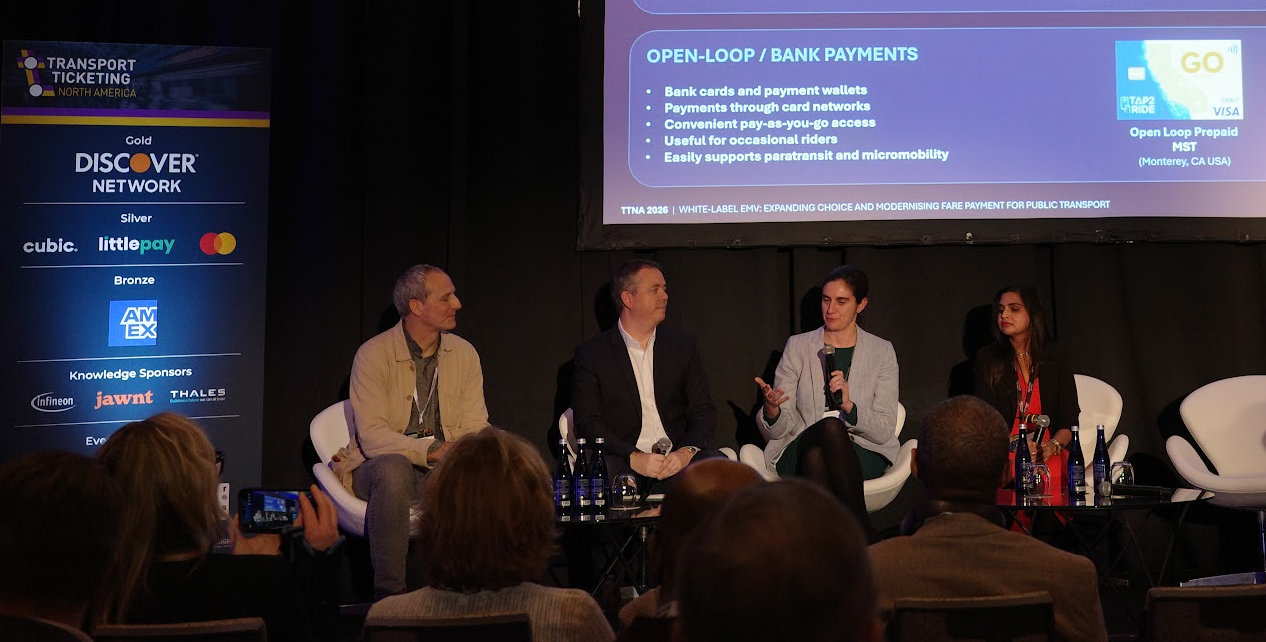
This week, Will and Ruth attended the third edition of Transport Ticketing North America. Similar to Transport Ticketing Global, this event brings together the transit agencies, technologies, and consultants that are building the future of transit payments, but focused on the US and Canada. Here are a few key takeaways our team observed during the gathering.
When a rider taps a card to pay their fare, is that card accepted on just the transit system’s closed fare reader network, or can it be used at any retailer on the global open payments network? This “closed versus open” debate has been a cornerstone of transit payments conferences for years, since Transport for London first started accepting open payments in 2012.
There are advantages, anxieties, and questions to each approach, but it’s no longer controversial that riders want to use open payments. When WMATA began accepting open payments quietly days before their public launch, riders simply saw the contactless symbol on the readers and began using it without the need for marketing or training. Adam McGavock, Project Manager of the Better Breeze launch at MARTA elaborated: “People want to pay with what’s already in their pocket.” It’s no longer a question of if agencies should accept open payments, but how.
Many users will prefer the card that is already in their pocket, but there are still many reasons why agencies want to continue offering their own fare media in the world of open payments. Some users prefer having a dedicated transit card - there is an inherent appeal to keeping it separate from their personal cards. Un[der] banked / cash-preferred riders need a way to ride - keeping a payment method accessible is critical. And not only does this allow them to ride, but it affords them all of the benefits of a pass user - longer windows, free transfers, discounts, and more.
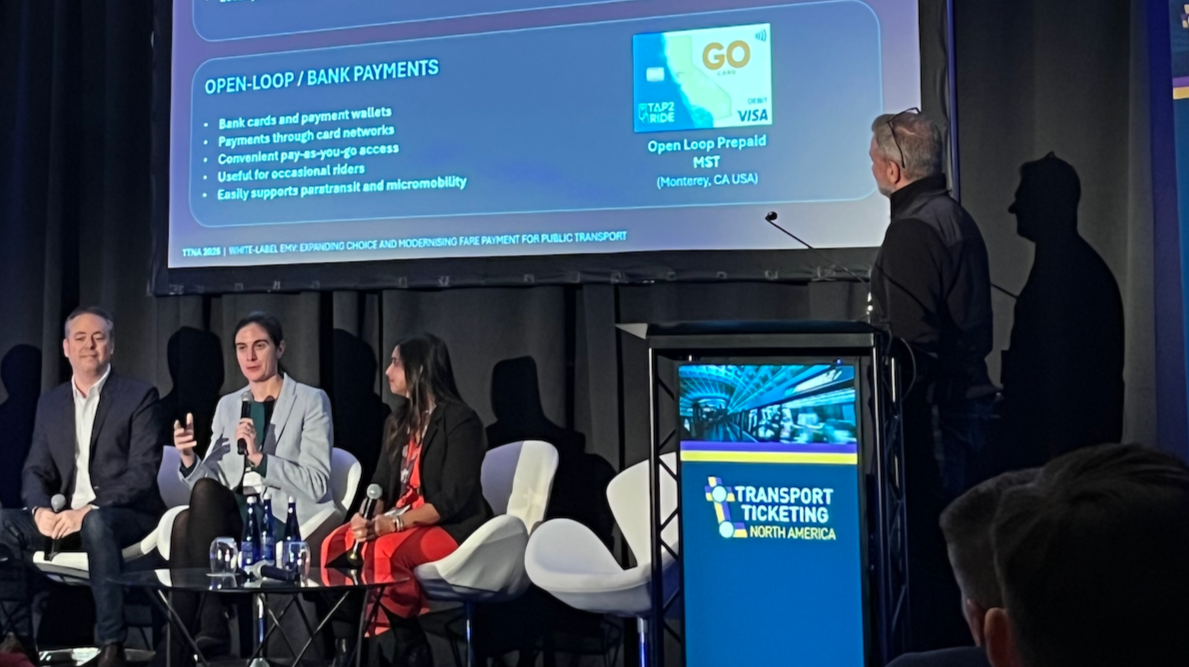
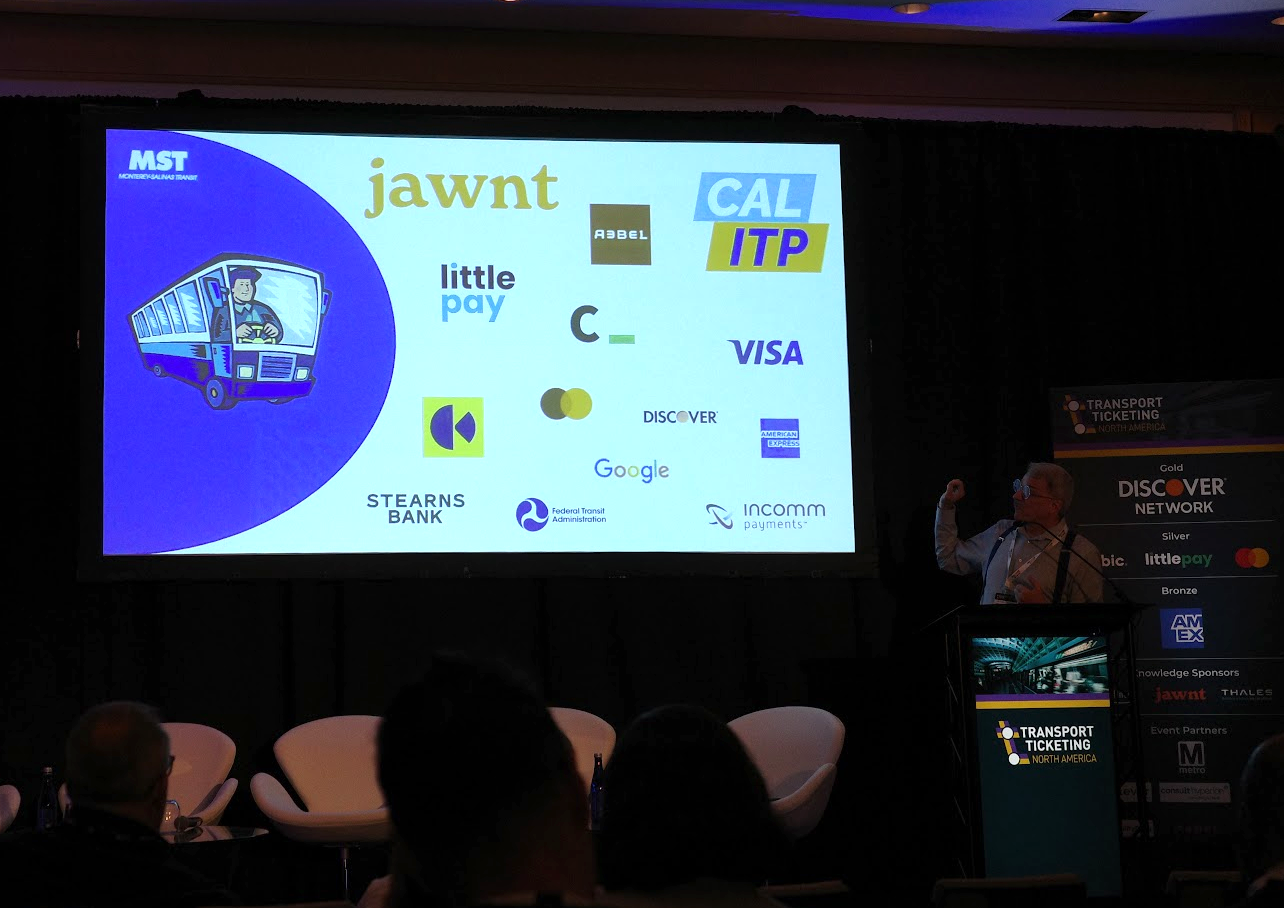
Our own Director of Product Partnerships, Ruth Miller, joined Santa Cruz Metro, Discover, Thales, and Rebel on stage to break down the implementation choices facing transit agencies. Jawnt is working with Monterey-Salinas Transit to launch a white label open EMV card in early 2027. This new prepaid card will be reloadable, require no personal information or ID from riders, and be merchant-restricted to transit.
To riders, they won’t need to know that their new transit fare card is moving funds along the EMV network. To most people who interact with it, this will just be another fare card. But the agency will be able to remove and retire their costly onboard cash handling and closed smart card hardware, seeing significant savings over the life of the project.
While there was broad agreement among the speakers that cost shouldn’t be the only deciding factor in procurement, the reality is that transit agencies must take cost somewhere into consideration when choosing a technology solution. The biggest criticism of open payments is that there are interchange fees on every transaction, which can quickly eat into fare revenue. But, as several speakers noted, transaction fees aren’t the whole story.
Consider the total cost of ownership over the life of a fare collection system. The hardware, software, maintenance, validation, cash handling, and support for a closed card system might be an upfront multi-year contract that feels like a sunk cost, but these should be factored into the equation, too. When considering these end-to-end costs, Monterey-Salinas Transit expects open payments to save several million dollars over the life of their program.
This TTNA was the first in DC, and the host agency had many reasons to be proud. WMATA launched open payments with Littlepay and Cubic in 2025 in a record six months. The launch was impressive both for its speed and absence of hiccups. Throughout the day, presenters spoke about similarly complex, adaptive, and resource-constrained deployments. The hurdles staff jumped through, the creative solutions they found under pressure, the new ways of thinking and working together.
But there was also a spoken acknowledgement that if we all do our jobs perfectly, our reward is keeping our names off Reddit. As Greg Garback, WMATA’s Director of Fare Revenue Systems and Modernization summed up: “Nobody cares about the color of the bus, they just want payments to be easy.”
Now back at our desks, we're helping agencies streamline fare collection in ways their riders will never notice. Our reloadable transit cards run on open payment networks. That lets agencies retire costly cash handling and closed-loop hardware while still giving every rider, banked or not, a dedicated fare card with the full benefits of a pass. Learn more about Jawnt for transit agencies