Who are you?
What industry do you work in?

Discover how employees commuted in 2025, from peak travel days to spending habits to city-by-city insights. Our first annual Jawnt Unwrapped breaks down the data behind your daily rides.

It’s December, which means your feeds are full of year-end recaps from music, wellness, and social media apps of all kinds. We wanted to jump on the train 👀 so we decided to put our own spin on the end-of-year recap.
What days and times are people traveling the most? How many different modes of transportation are they taking? How many days before NYC riders reach their weekly fare cap? We dug into the past 12 months of anonymized commuting transactions from Jawnt Pass users and packaged up some of our favorite takeaways.
Welcome to Jawnt Unwrapped: a look back at how you and the rest of the Jawnt community moved through 2025.
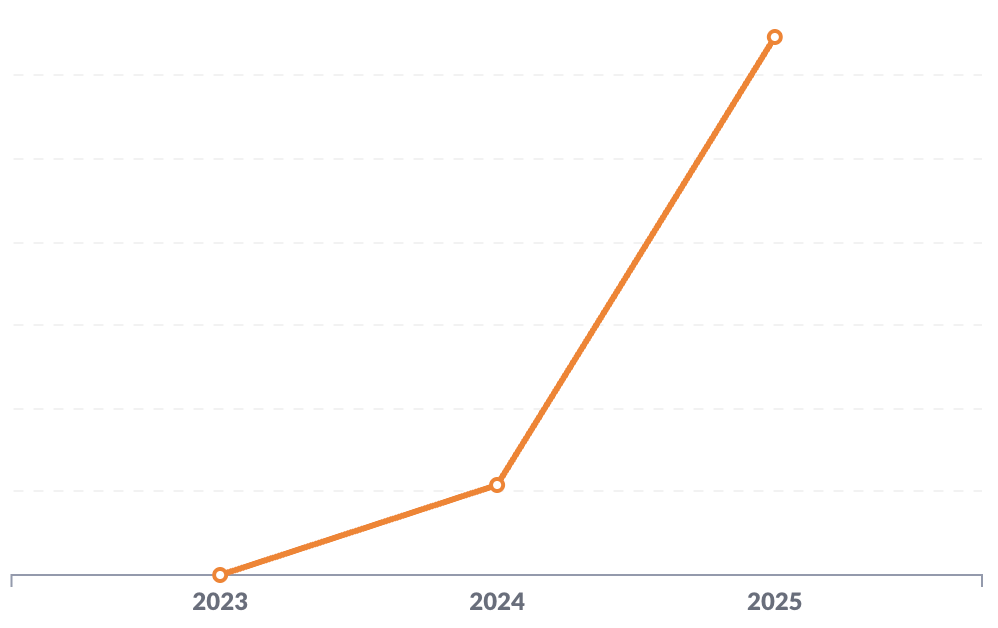
Since launching Jawnt Pass in February 2024, more and more commuters are using their card to pay for transit, parking, and other commuting costs.
From 2024 to 2025, the total number of rides increased by 634%, showing that Jawnt Pass is playing a bigger role in everyday commuting (and helping employees keep more of their paycheck at the same time!).
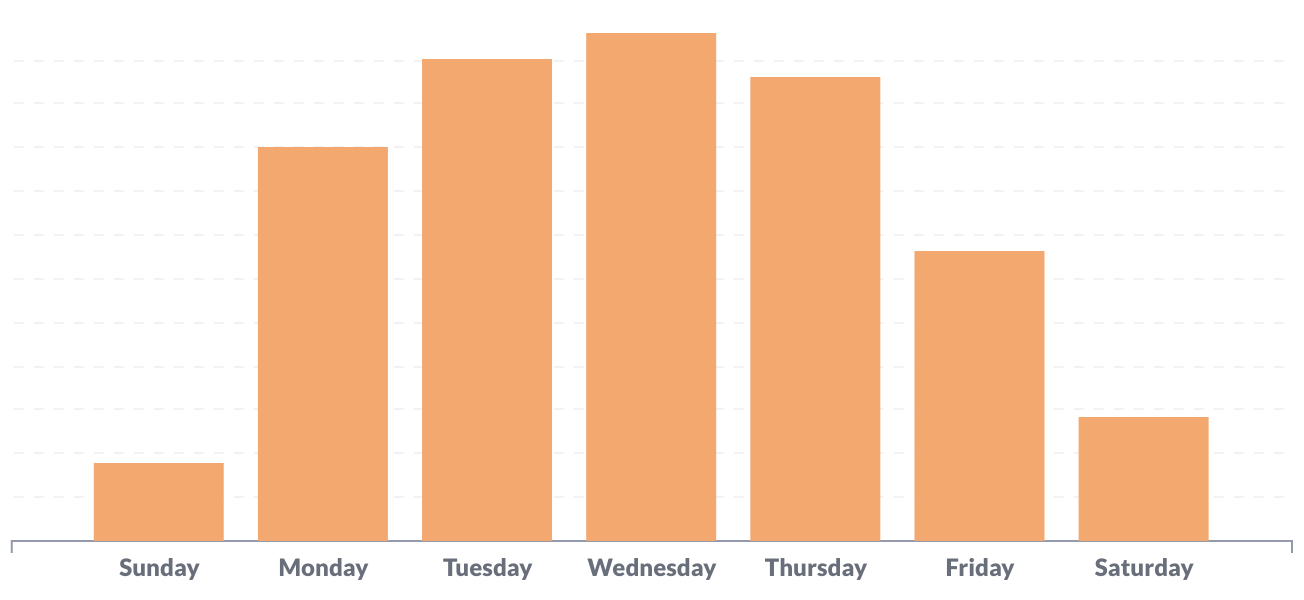
You probably feel this already, but the numbers make it official: you commute most often on Wednesdays.
Instead of an even distribution across the week, ridership patterns now reflect the hybrid work reality that’s settled in since 2020. Tuesday, Wednesday, and Thursday are the most popular in-office days, with Wednesday squarely in the lead.
This lines up with research from Stanford’s Nick Bloom, who has tracked the work-from-home habits across the country, revealing that hybrid schedules are here to stay.
A note on methodology: If you’ve ever noticed that the “transaction date” in your Jawnt Pass history doesn’t quite match when you actually tapped into the bus or train, there’s a reason why. Banks and payment processors settle transactions in batches—sometimes within hours, sometimes 24-48 hours later. So to get a better picture of when you really traveled, we looked at authorization hold data. Holds are most often reflected as pending payments while the payment is finalized behind the scenes. Because holds are usually created the moment you tap your card, we can look at commuting habits down to the hour. Which brings us to…
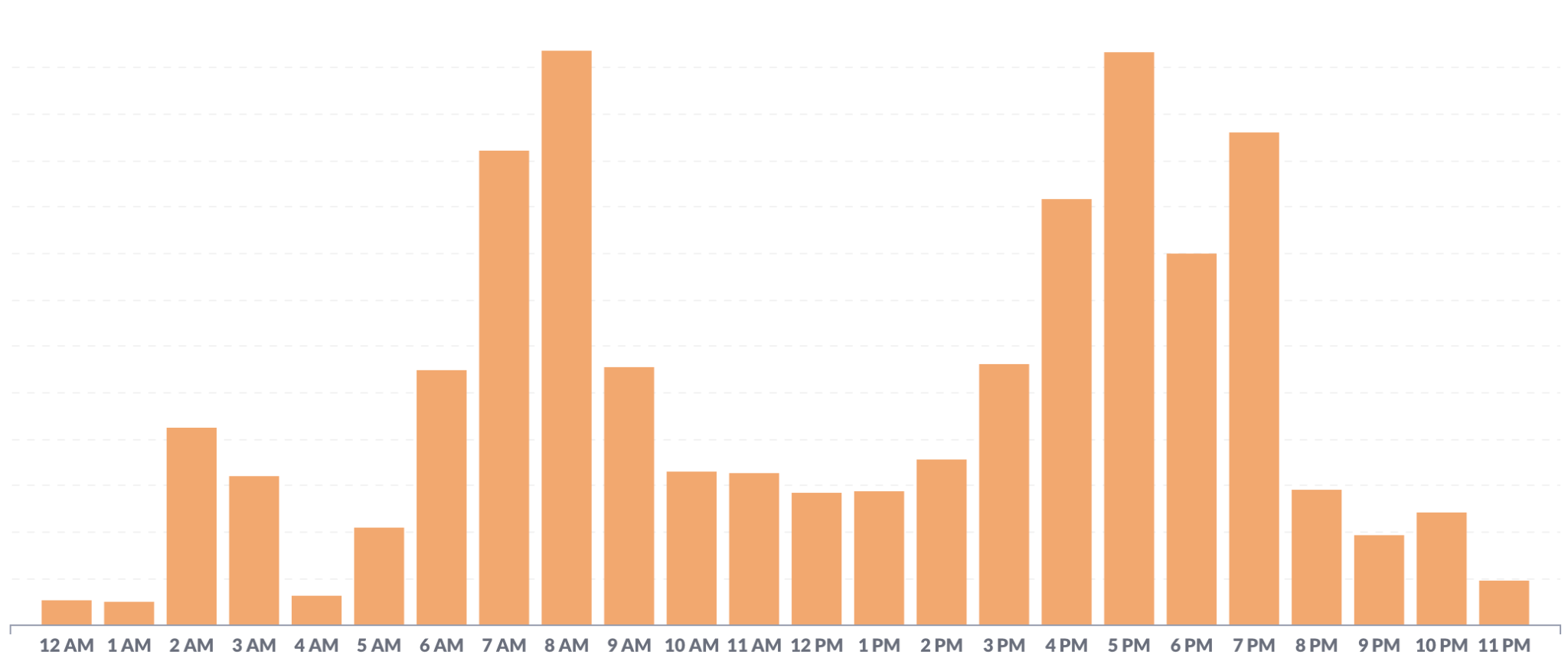
Your morning travel still has a strong peak between 6-9am, and evenings between 4-7pm, with more variability throughout the day. Some of you are leaving later, coming home earlier, building longer mid-day breaks, or shifting hours entirely. In other words: work schedules are still structured, but it’s a lot less rigid than it used to be.
Jawnt Pass gives riders the flexibility to pay for travel beyond the commute too, as allowed by the IRS. So it’s important to note that while this data largely reflects a commuting population, the flexibility of the benefit means that we’ll see more and more transactions happening outside of regular commuting hours.
What’s that unusual spike around 2-3am? While we did see a number of consistent early morning transactions tied to a small group of individual riders, there’s a more likely explanation. Some open loop transit systems don’t immediately send authorization requests to the bank, instead “batching” them and sending them at a later time. These deferred authorizations are the likely explanation for that early morning spike.
When we look at where Jawnt Pass riders traveled most in 2025, the top cities were:
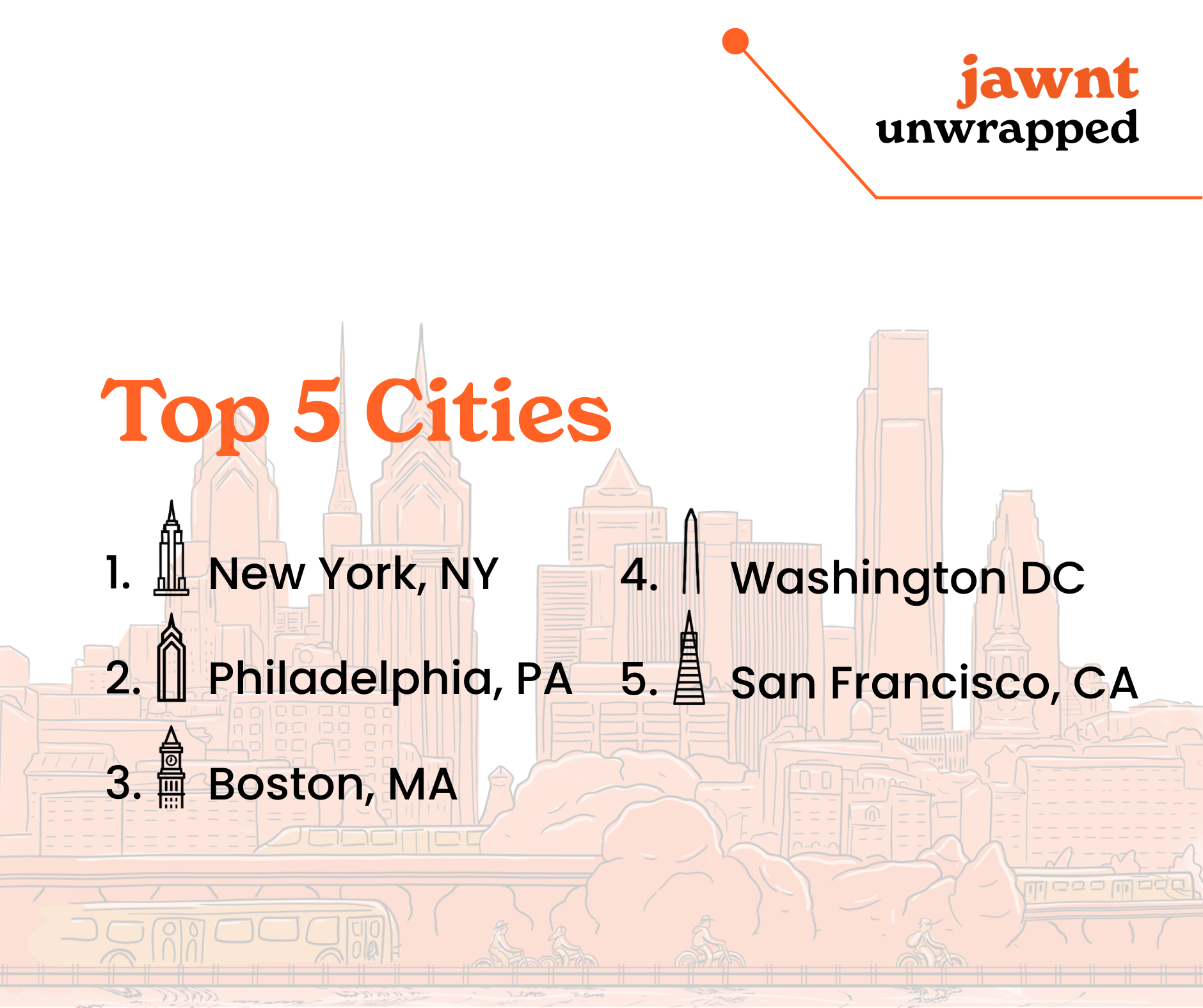
What do these cities all have in common? They’ve all rolled out Tap-to-Pay across their transit systems, making it easy to pay with any contactless card, including Jawnt Pass. When you don’t have to reload a transit pass or keep track of agency-specific cards, it’s all the more reason to put that commuter card in action.
Honorable mention to these small-but-mighty cities punching above their weight when it comes to commuting by transit: Derwood, MD (pop. 1,800), Lindenwold, NJ (pop. 21,000), and Harrisburg, PA (pop. 50,000), proving that good transit habits thrive everywhere.
With its diversity of transportation modes, innovative fare capping, and sheer number of commuters, NYC gives us no shortage of interesting travel data.

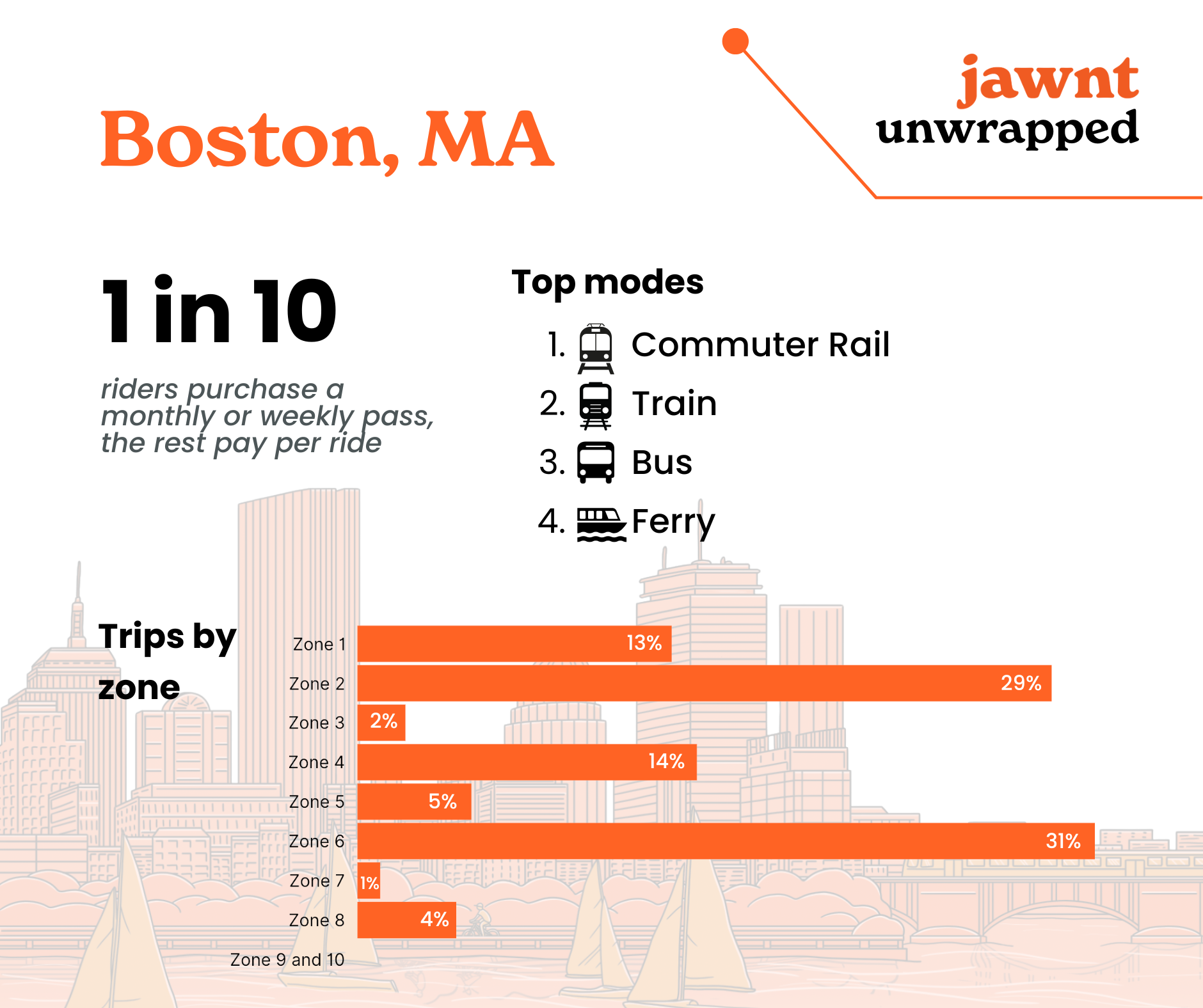
If you take the Green Line, you may have spotted Jawnt in the wild: our Boston launch this fall brought a wave of new riders onto Jawnt Pass.
Some Boston-specific highlights:
We’ve focused a lot on transit, but Jawnt Pass is used for parking, too. When we break down transactions by these buckets, we see just how wide of a spread these commuting costs cover.
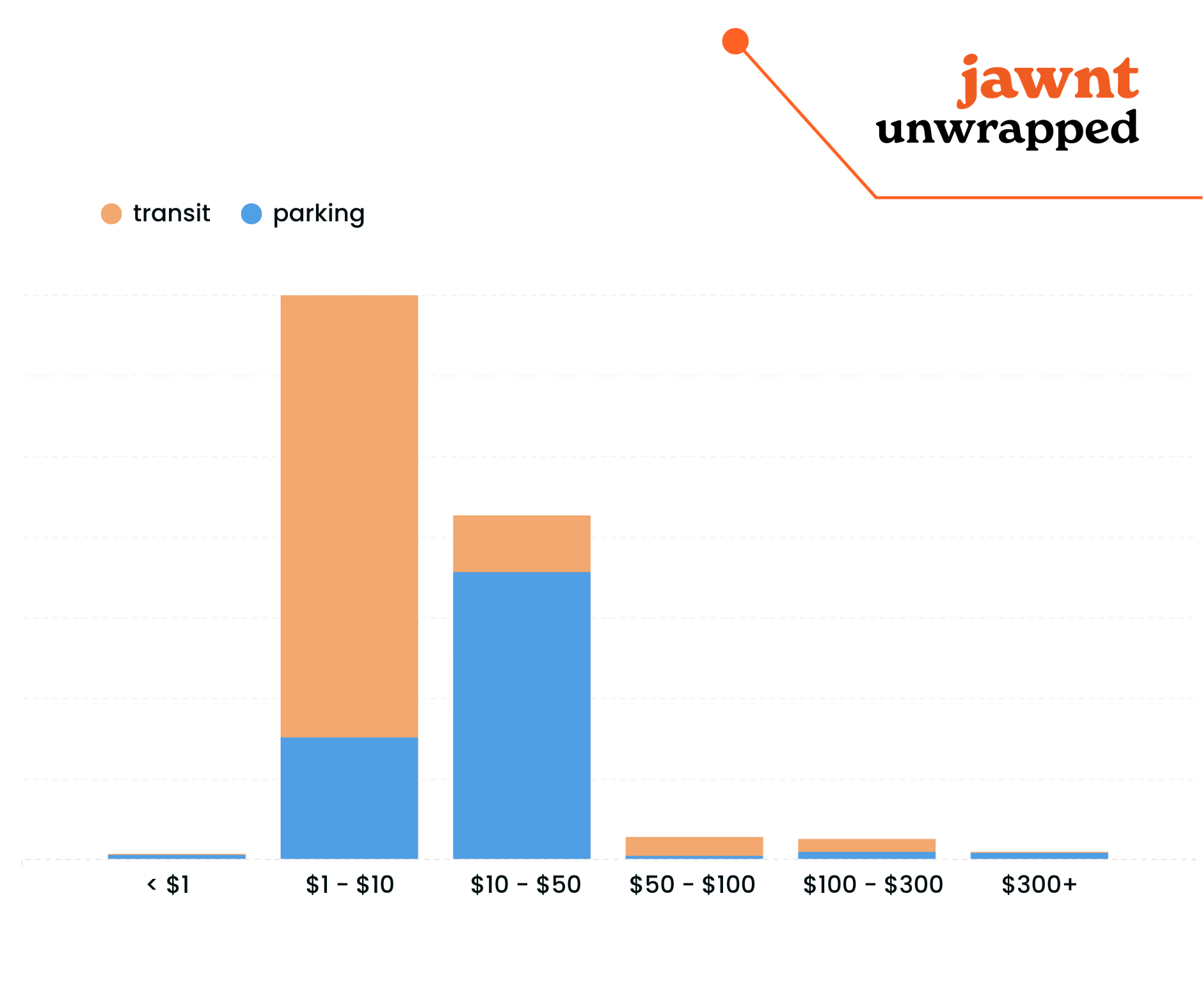
The majority of transit purchases are within the $1-10 range, with an average transaction amount of $3.43. But employees who commute every day can use their commuter card for larger expenses too, such as monthly passes. We also saw some weekend Amtrak trips that fell into the larger buckets, signalling that your employer-provided commuter card is coming in handy for non-work travel, too.
The majority of parking transactions fall in the $10-50 range, and the associated vendor names suggest these are largely parking garage and street parking purchases. But parking purchases can be more costly than that—especially for monthly or annual permits—with our largest transactions reaching four figures!
We saw a pretty even split between commuters who use Jawnt Pass for transit only (48%) and those who use Jawnt Pass for parking only (42%). But 10% of you use some combination of transit and parking, and move funds between these accounts throughout the year.
Earlier this year we launched Jawnt Redirect, which lets employees move pre-tax transit and parking funds between accounts. We saw many of you use this feature to your advantage, adjusting your pre-tax dollars to match your commutes throughout the year.
In 2025, among users who made a change:
Sometimes transit funds accrue faster than you can use them. Sometimes a life change (new job, new office, new house, new baby) nudges you toward parking. Whatever the reason, we love seeing you make the benefit work for you.
So what can we take away from all this data? Beyond the where and when of your daily travel, the ways you used Jawnt Pass in 2025 reveal a snapshot of the modern commute: hybrid schedules, multimodal commutes, and Tap-to-Pay included.
We love to see which traveling habits remain unchanged over time (it’s tough to break that 9-to-5 cycle), and which new trends are unfolding (Tap-to-Pay in more major metros = more city spotlights coming your way soon).
From all of us here at Jawnt, thanks for riding with us in 2025! We already can’t wait for Jawnt Unwrapped 2026.